Roohle · Front Matter · 2026
On the rūḥ, and on reading the Qur'an for the time we are in.
قُلِ ٱلرُّوحُ مِنْ أَمْرِ رَبِّى
Geneva · Beirut · The work of evenings
If what I say aligns with what Allah says, it is from Him.
If it falls short, it is on me.
1 · Editorial Statement
What this publication is for.
I started Roohle because I could not find what I was looking for. The mainstream treats the reader like a child — just obey, without why. The scholarly world locks the conversation behind sectarian gates. And the Qur'an itself — the actual Book — is the one thing almost nobody is reading directly.
Roohle exists to teach Muslims about the rūḥ — the spirit — from a Qur'anic perspective, and through that teaching, to elevate the spiritual experience of the reader and unite the Ummah around the Book itself.
It transcends sectarianism. It is not a Sunni publication and it is not a Shīʿī publication; it is a Qur'anic publication, and where the Qur'an speaks, that is where the work begins.
It is written for an Ummah preparing for the end of times — for the appearance of the Mahdī, and for vigilance against the deceptions of the Dajjāl. Reading carefully is a form of that vigilance.
"Roohle" — رُوحْ لِي — "My spirit." The publication is an offering, not a sermon.
2 · The Editor
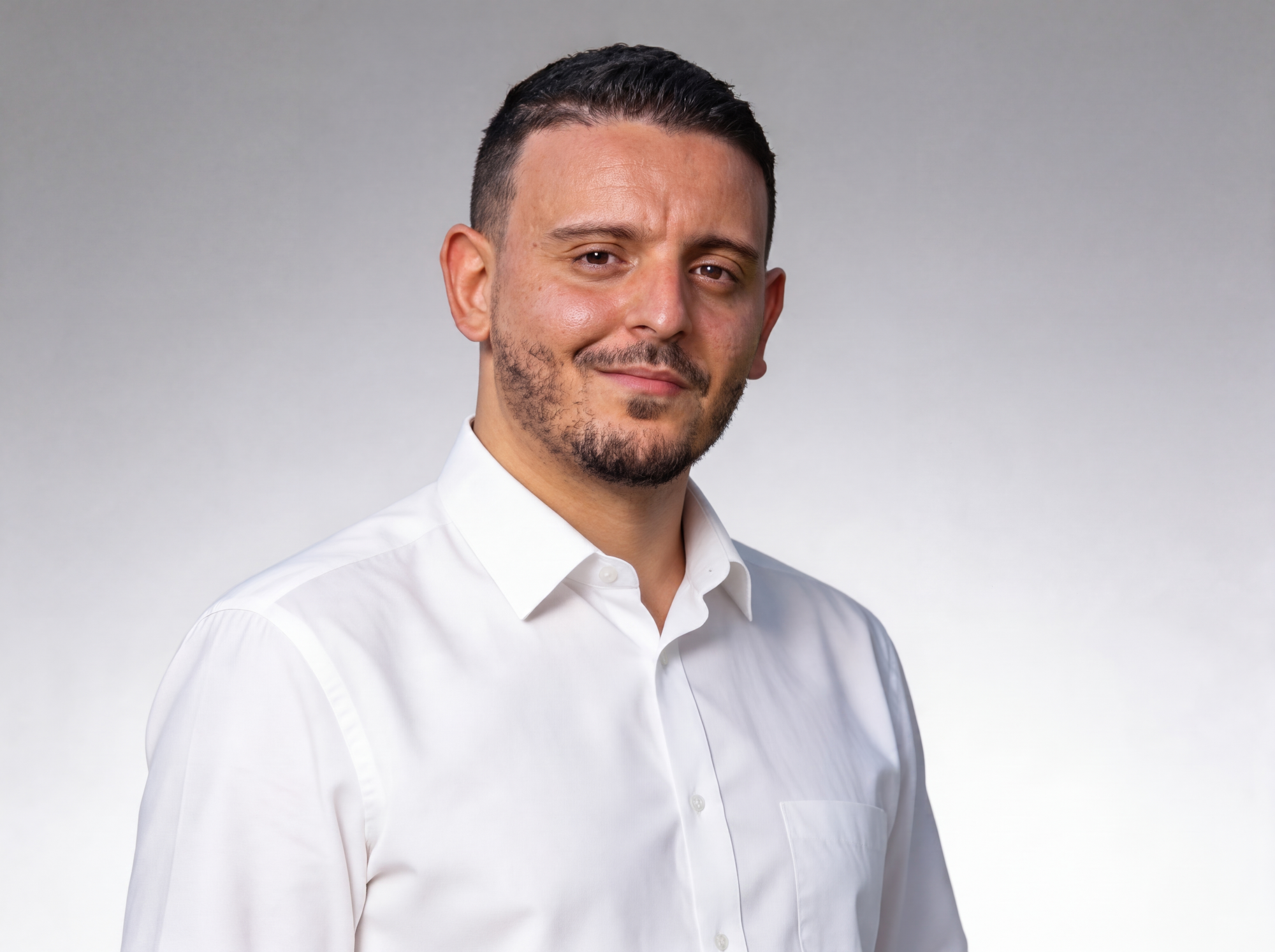
Amer Sakr
Physicist by training. Qur'anic researcher by calling.
Lebanese-born, based in Geneva. Ph.D. in Physics; by day, Director of Science Communications at a theoretical research institute in Switzerland. Roohle is the work of evenings, weekends, and long flights — a parallel life that has been gathering for as long as the professional one.
I am not a sheikh. I am not a classical tafsīr scholar. I am a researcher who took the Qur'an seriously enough to read it as if it meant what it said, and to cross-reference every word against the rest of the Book. I have been engaged with Islamic eschatological frameworks since 2008 — long enough that the urgency of this moment is not new to me, only sharper.
Intellectual debts
Sheikh Imran Hosein on macro-eschatology. Ibn ʿArabī on the architecture of the Spirit. Ibn ʿAṭāʾillāh and al-Ghazālī on the inner work. The classical Arabic poets on what language can carry. None of them gets the last word — that belongs to the Qur'an — but each shaped the questions I came to it with.
3 · Methodology & Sources
How I read the Qur'an
Tafsīr al-Qur'an bi'l-Qur'an.
تَفْسِيرُ ٱلْقُرْآنِ بِٱلْقُرْآنِ
The Qur'an interprets itself. When the Book uses a term — rūḥ, nafs, qalb — I look at every instance of that word across the entire text before any later commentary is consulted. Six principles guide the work.
01
Qur'anic Priority
Every instance of a word, every cross-reference. The Book interprets itself before any later commentator weighs in.
02
Linguistic Precision
Arabic carries meanings translation cannot. Roots, verb forms, and grammatical patterns are not decorative — they are the argument.
03
Thematic Coherence
The Qur'an does not contradict itself. Apparent tensions tend to resolve when the whole is read against itself.
04
Lived Experience
If the Qur'an says X produces Y, then those who do X should experience Y. Theory has to align with practice — otherwise the reading is wrong.
05
Prophetic Example
Each prophet embodied specific principles. Their lives are not history alone — they are templates for what the Book is asking of the reader.
06
Textual Confidence, Personal Humility
I could be wrong. The text is not. I show my case clearly and invite you to verify everything against the Book.
4 · Correspondence
Get in touch
For correspondence, corrections, or quiet questions.
I read everything that comes through. Replies are not always quick — please do not let that discourage you. If you've spotted an error in a piece, name the verse and the line, and I'll be grateful.