Reflections · / /
Alcohol in Islam: The Satanic Ritual That Disconnects You From God
The Quran calls alcohol filth from Shaytan's work — a satanic ritual that severs the channel between you and Allah. Here is the four-stage Quranic protocol for getting free from addiction.
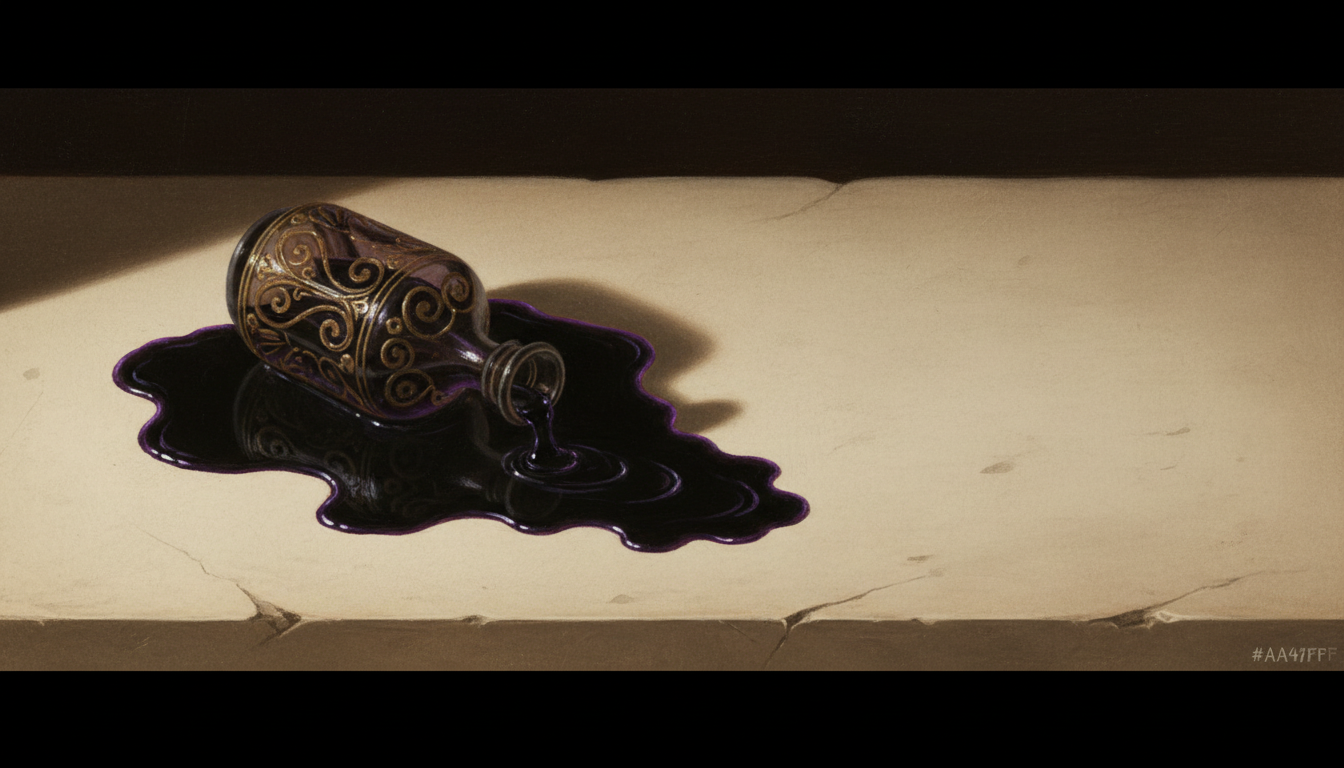
The Quran does not call alcohol unhealthy. It calls it filth.
يَا أَيُّهَا الَّذِينَ آمَنُوا إِنَّمَا الْخَمْرُ وَالْمَيْسِرُ وَالْأَنصَابُ وَالْأَزْلَامُ رِجْسٌ مِّنْ عَمَلِ الشَّيْطَانِ فَاجْتَنِبُوهُ لَعَلَّكُمْ تُفْلِحُونَ
"O you who have believed — intoxicants, gambling, idol-stones, and divination arrows are filth, from the work of Shaytan. So avoid them, that you may succeed."
Read the list. Khamr — intoxicants. Maysir — gambling. Anṣāb — the idol-stones the pagan Arabs prayed to. Azlām — the arrows they used to divine the future.
Allah grouped alcohol with idol worship — the rituals pagan Arabs performed to access spiritual power. That is what khamr does. It accesses spiritual power. Just not the kind you wanted.
Most Muslims know drinking is haram. Few understand why the Quran reaches for the word rijs1 — filth, defilement — to name something the modern world treats as sociable. The reason is the entire article.
What alcohol actually does to your Spirit
The Spirit communicates with you through your heart.
This is a physical claim. The Rūḥ2 itself is not material; the medium it travels through is. Allah designed the brain to be the receiver. The voice that tells you not to do something. That tug toward the qibla you've felt before but couldn't explain. Knowledge arriving in your chest before any thought formed it. All of it travels through neural pathways — the same path speech takes from ear to mind.
Alcohol scrambles those pathways.
Long-term drinking is worse, but even one night impairs judgment, memory, coordination, and attention. The receiver goes static. When the receiver is static, the signal cannot get through.
So the Spirit withdraws.
It does not fight the alcohol or push through static. The signal cuts off until you are sober — the way a guest who came to speak leaves a room that has filled with smoke.
This is why Allah said:
يَا أَيُّهَا الَّذِينَ آمَنُوا لَا تَقْرَبُوا الصَّلَاةَ وَأَنتُمْ سُكَارَىٰ حَتَّىٰ تَعْلَمُوا مَا تَقُولُونَ
"O you who have believed, do not approach prayer while you are intoxicated, until you know what you are saying."
The verse is usually read as etiquette — don't slur the Fātiḥah. The deeper reading is mechanical. Prayer is the means of communicating with Allah, and this access requires the Spirit to be present. Intoxication empties the room. There is no one in you that the prayer can travel through.
In that vacuum, something else moves in. Allah named the mechanism plainly:
وَمَن يَعْشُ عَن ذِكْرِ الرَّحْمَٰنِ نُقَيِّضْ لَهُ شَيْطَانًا فَهُوَ لَهُ قَرِينٌ
"Whoever turns blind to the remembrance of al-Raḥmān, We assign for him a Shaytan, so he becomes his constant companion."
Nuqayyiḍ.3 From the root ق ي ض — to give one thing in place of another. A transaction. The Spirit ignored, withdraws; a Shaytan moves into the vacancy. Not metaphorically. By divine assignment.
Every drink is a vacancy notice.
The four-stage decree
The Quran did not prohibit alcohol overnight.
This is the discovery most Muslims have never been told. Allah knew exactly how addiction is structured in the human nafs. So He guided the early Muslim community through a four-stage withdrawal protocol — over years and across multiple Surahs — building toward total cessation only after the community had been prepared. Allah modeled, in His own revelation to His own people, exactly how a person comes off a substance that has them.
Stage 1 — Neutral naming
وَمِن ثَمَرَاتِ النَّخِيلِ وَالْأَعْنَابِ تَتَّخِذُونَ مِنْهُ سَكَرًا وَرِزْقًا حَسَنًا
"And from the fruits of date palms and grapes, you take intoxicant and good provision."
Stage 1 does not prohibit. It names.
Notice what the Quran does here. The same fruit becomes either sakar4 — intoxicant — or rizq ḥasan — good provision. The raw material is one. What you do with it branches. The verb is tattakhidhūn — you take. The choice is yours.
This is awareness without command. The first stage of any recovery is naming the thing. I am taking this. The same date that could have fed me, I am fermenting. That is a choice I am making.
No shame. No threat. Just a name.
Stage 2 — The honest ledger
يَسْأَلُونَكَ عَنِ الْخَمْرِ وَالْمَيْسِرِ ۖ قُلْ فِيهِمَا إِثْمٌ كَبِيرٌ وَمَنَافِعُ لِلنَّاسِ وَإِثْمُهُمَا أَكْبَرُ مِن نَّفْعِهِمَا
"They ask you about intoxicants and gambling. Say: in them is great sin, and benefits for people, but their sin is greater than their benefit."
The Quran does not deny what the drinker actually feels.
Manāfi' — benefits. The verse names them. The relaxation is real. So is the brief social ease, the temporary release after a hard week. But the next clause renders the verdict: "their sin is greater than their benefit." The cost is everything alcohol quietly takes from you over time — the relationships it strains, prayers it makes incoherent, years that disappear behind it. The pleasure is real. The damage is greater than every relief you have ever felt.
That is the divine accounting.
An addict has felt the relief. He has counted the times it worked. If the message he hears denies that felt experience entirely, he stops trusting the messenger before the larger truth reaches him. The Quran does not ignore the benefits. The Quran acknowledges what the drinker felt and then weighs it against everything the substance has cost him.
This is Stage 2 of any recovery — a true accounting that names the pleasure and refuses to stop there.
Stage 3 — The conditional barrier
The verse from An-Nisāʾ you already read:
"O you who have believed, do not approach prayer while you are intoxicated, until you know what you are saying." — Q. 4:43
This is the third stage. The first protected boundary. Specific times become off-limits to the substance — even before total cessation. Allah erects the barrier first around the most important access point: the ṣalāh.
Modern recovery vocabulary calls this harm reduction. The Quran frames it as preparation.
Why prayer first? Because prayer is the recovery channel itself. If you concede the prayer time to the substance, you have a deity problem before you have a substance problem — you are giving the alcohol the hours your address to Allah is supposed to occupy. Stage 3 protects the channel first. Five times a day, the believer is held in clarity even while the rest of the day is still under partial use. Each prayer becomes a clean window. The clean windows train the muscle Stage 4 will need.
Stage 4 — Total cessation, with the mechanism named
إِنَّمَا يُرِيدُ الشَّيْطَانُ أَن يُوقِعَ بَيْنَكُمُ الْعَدَاوَةَ وَالْبَغْضَاءَ فِي الْخَمْرِ وَالْمَيْسِرِ وَيَصُدَّكُمْ عَن ذِكْرِ اللَّهِ وَعَنِ الصَّلَاةِ ۖ فَهَلْ أَنتُم مُّنتَهُونَ
"Shaytan only wants to plant enmity and hatred between you through intoxicants and gambling, and to turn you away from the remembrance of Allah and from prayer. Will you, then, desist?"
The final verse names Shaytan's three goals: enmity between people, blocking the remembrance of Allah, and blocking ṣalāh. The cure target is identified. The decree is total. Avoid it, that you may succeed.
And the closing question is not rhetorical. It demands an answer. Will you stop?
Stage 4 of recovery is not a feeling. It is a decision.
This is your template. Four steps to overcome your addiction — to a substance, to a behavior, to anything that has you in sukr. Allah showed you how He led the early Muslim community through it. The four stages are in the Quran, in the same order. They still work the same way. Now you walk it.
This is not only about alcohol
Read this verse carefully.
يَوْمَ تَرَوْنَهَا تَذْهَلُ كُلُّ مُرْضِعَةٍ عَمَّا أَرْضَعَتْ ... وَتَرَى النَّاسَ سُكَارَىٰ وَمَا هُم بِسُكَارَىٰ
"On that Day, every nursing mother will forget what she nursed... and you will see the people drunk, though they are not drunk."
Allah describes the Day of Judgment. He calls people sukārā — drunk — and then says they are not drunk. No alcohol involved. They are still in a state of intoxication.
Think about that.
The Quran's category of sukr is not chemical. It is any state in which awareness is suspended, and the person does not know what they are saying or doing. Alcohol produces that state. So does the scroll. So does pornography. So does the slot machine.
Every addiction produces a sukr state.
Which means 4:43 — do not approach prayer in this state — is not only about ethanol. It is establishing a principle. The sukr state is incompatible with the access point to Allah. You cannot pray with conviction while you are mid-scroll. Cannot ask for guidance while your brain is still wet from the porn. Cannot hear the Spirit while you are deep in the consumption tunnel.
The Dajjal system understood this verse better than most Muslims have. Modern technology is engineered to produce sukr on demand. Feeds hijack attention. Games dissolve time. Content overrides judgment before you've thought to question it. The point is not to make you drink. The point is to keep you drunk. And it all starts with one sip.
By the way — if you do not drink alcohol but you cannot put the phone down for ten minutes without feeling the ache, the verse is still talking to you.
The cure: the Quranic protocol for addiction recovery
The Quran does not diagnose without prescribing.
The recovery protocol comes from four verses. Two from the story of Yūsuf عليه السلام — in the moment when he was being seduced by a powerful woman with the door locked behind him. Two from elsewhere in the Quran, placed by Allah for exactly this purpose. Together they are the four moves of every legitimate addiction recovery model written since.
First — physical escape.
وَاسْتَبَقَا الْبَابَ
"And they raced for the door."
Yūsuf did not stand in the room and reason with the temptation. He did not pray it away from where he was. He ran for the door. Environmental control comes before everything else. You cannot beat the craving in its own habitat. Leave the bar. Delete the app. Pour the bottle out. This is not weakness. It is the prophetic first move.
Second — the prayer.
قَالَ رَبِّ السِّجْنُ أَحَبُّ إِلَيَّ مِمَّا يَدْعُونَنِي إِلَيْهِ ۖ وَإِلَّا تَصْرِفْ عَنِّي كَيْدَهُنَّ أَصْبُ إِلَيْهِنَّ وَأَكُن مِّنَ الْجَاهِلِينَ
"He said: My Lord, prison is more beloved to me than what they call me to. And if You do not turn their plot away from me, I will incline toward them and be of the ignorant."
Five elements in one prayer. He addresses Allah directly. He names something painful — prison — as preferable to the temptation. He admits powerlessness: if You do not turn it away, I will fall. He asks Allah, not himself, to do the turning. And he refuses to merge with the identity that yielding would give him — one of the ignorant.
Fourteen centuries before Alcoholics Anonymous, Yūsuf عليه السلام delivered Step One: I cannot do this without You.
The verse that follows is the structural promise.
فَاسْتَجَابَ لَهُ رَبُّهُ فَصَرَفَ عَنْهُ كَيْدَهُنَّ
"So his Lord responded to him and turned their plot away from him."
Allah answered his prayer. Yūsuf received support without having to white-knuckle the craving. He prayed with full sincerity, and the temptation was turned away from him. This is what Allah promises every addict who prays Yūsuf's prayer with full sincerity. Allah turns His support to him away from temptations.
Third — the vertical exit.
When Satan declared his attack on humanity, he named four directions:
ثُمَّ لَآتِيَنَّهُم مِّن بَيْنِ أَيْدِيهِمْ وَمِنْ خَلْفِهِمْ وَعَنْ أَيْمَانِهِمْ وَعَن شَمَائِلِهِمْ
"Then I will surely come at them from before them and from behind them, and from their right and from their left."
Front. Back. Right. Left.
Satan omitted the upward direction.
Satan cannot attack from above. The vertical is the unguarded exit. And the posture that travels the vertical — body downward, spirit upward — is sujūd. The Prophet ﷺ said the closest a servant gets to his Lord is in sujūd.5 It is also the one direction Shaytan declared he would not block.
When the craving comes, get to the floor.
Forehead, nose, hands, knees, feet. Stay there longer than you think you need to. The vertical escape to God does not care that you are weak. Does not care that you have fallen before. It is the door that the Shaytan couldn't put a guard on.
Fourth — the circuit-breaker.
إِنَّ الصَّلَاةَ كَانَتْ عَلَى الْمُؤْمِنِينَ كِتَابًا مَّوْقُوتًا
"Indeed, prayer has been decreed upon the believers as a timed obligation."
Mawqūt. Timed. The only command Allah described this way. Five forced interrupts across the day, hitting the predictable peaks and troughs of human attention. Fajr breaks the unconscious. Dhuhr breaks the work tunnel. ʿAṣr breaks the afternoon dip. Maghrib breaks the dinner-and-decompress slide. ʿIshāʾ breaks the late-night scroll.
Every craving has a half-life. If you can hold for the duration of one ṣalāh, the wave passes. If you can hold for the duration of two, the wave is broken. The five-times structure is not arbitrary devotion. It is the Quran's craving-management system, embedded in the day before the day is corrupted.
One more thing. When you fall — and you will — Allah called the returning ones al-tawwābīn,6 in the intensive form. The repeatedly-returning ones. The grammar assumes you will fall again. It also assumes you will stand up again. The Quran does not demand perfection from a recovering addict. It draws the protocol and tells you exactly where to come back when you slip.
Alcohol is an example. The mechanism is every addiction the Dajjal system has built around you — the bottle, the screen, the algorithm, the rage tunnel. The Spirit cannot reach you through any of them.
Allah did not call khamr filth because He was offended by your enjoyment. He called it filth because of what it does to the channel through which the Spirit He breathed into you travels.
You have the protocol now. Begin.
إِنَّمَا الْخَمْرُ وَالْمَيْسِرُ ... رِجْسٌ مِّنْ عَمَلِ الشَّيْطَانِ
"Intoxicants, gambling... are rijs, from the work of Shaytan." The article's central naming. Rijs places alcohol in the category of moral abomination, not ordinary impurity.
Q. 5:90 · Sūrah al-Māʾidah · Madanī
لَا تَقْرَبُوا الصَّلَاةَ وَأَنتُمْ سُكَارَىٰ
"Do not approach prayer while you are intoxicated." Stage 3 of the four-stage decree — the conditional barrier protecting the prayer time before total cessation.
Q. 4:43 · Sūrah al-Nisāʾ · Madanī
وَمَن يَعْشُ عَن ذِكْرِ الرَّحْمَٰنِ نُقَيِّضْ لَهُ شَيْطَانًا
"Whoever turns blind to the remembrance of al-Raḥmān, We assign for him a Shaytan." The transactional substitution: Spirit ignored, Shaytan installed.
Q. 43:36 · Sūrah al-Zukhruf · Makkī
تَتَّخِذُونَ مِنْهُ سَكَرًا وَرِزْقًا حَسَنًا
"You take from it intoxicant and good provision." Stage 1 — neutral naming. The same fruit becomes either sakar or rizq ḥasan; the choice belongs to tattakhidhūn — you.
Q. 16:67 · Sūrah al-Naḥl · Makkī
قُلْ فِيهِمَا إِثْمٌ كَبِيرٌ وَمَنَافِعُ لِلنَّاسِ وَإِثْمُهُمَا أَكْبَرُ
"In them is great sin and benefits for people, but their sin is greater." Stage 2 — the honest ledger. The Quran acknowledges manāfi' and weighs them against the cost.
Q. 2:219 · Sūrah al-Baqarah · Madanī
فَهَلْ أَنتُم مُّنتَهُونَ
"Will you, then, desist?" Stage 4 — the closing question. Not rhetorical: the verb form demands a decision in answer.
Q. 5:91 · Sūrah al-Māʾidah · Madanī
وَتَرَى النَّاسَ سُكَارَىٰ وَمَا هُم بِسُكَارَىٰ
"And you will see the people drunk, though they are not drunk." The Quran's wider category — sukr as a state without alcohol. The verse extends 4:43 to every form of suspended awareness.
Q. 22:2 · Sūrah al-Ḥajj · Madanī
وَإِلَّا تَصْرِفْ عَنِّي كَيْدَهُنَّ ... فَاسْتَجَابَ لَهُ رَبُّهُ فَصَرَفَ عَنْهُ كَيْدَهُنَّ
"Unless You turn their plot away from me ... So his Lord responded and turned their plot away from him." Yūsuf's prayer and the structural promise — the Quranic recovery prayer for any addict.
Q. 12:33–34 · Sūrah Yūsuf · Makkī
إِنَّ الصَّلَاةَ كَانَتْ عَلَى الْمُؤْمِنِينَ كِتَابًا مَّوْقُوتًا
"Prayer has been decreed upon the believers as a timed obligation." Mawqūt — the only command in the Quran specified as time-bound. The five-times structure as the day's craving-management system.
Q. 4:103 · Sūrah al-Nisāʾ · Madanī
Stay with the work
A short letter, when there is something worth sending.
No schedule. No marketing. A note when a new piece is published, sometimes a passage being worked through, occasionally nothing for weeks. Roughly once a month.