Spirituality · / /
The Adam Archetype — Why We're All Chasing Immortality And Power
#04: I Discovered 8 Prophetic Archetypes In The Quran That Explain Human Transcendence
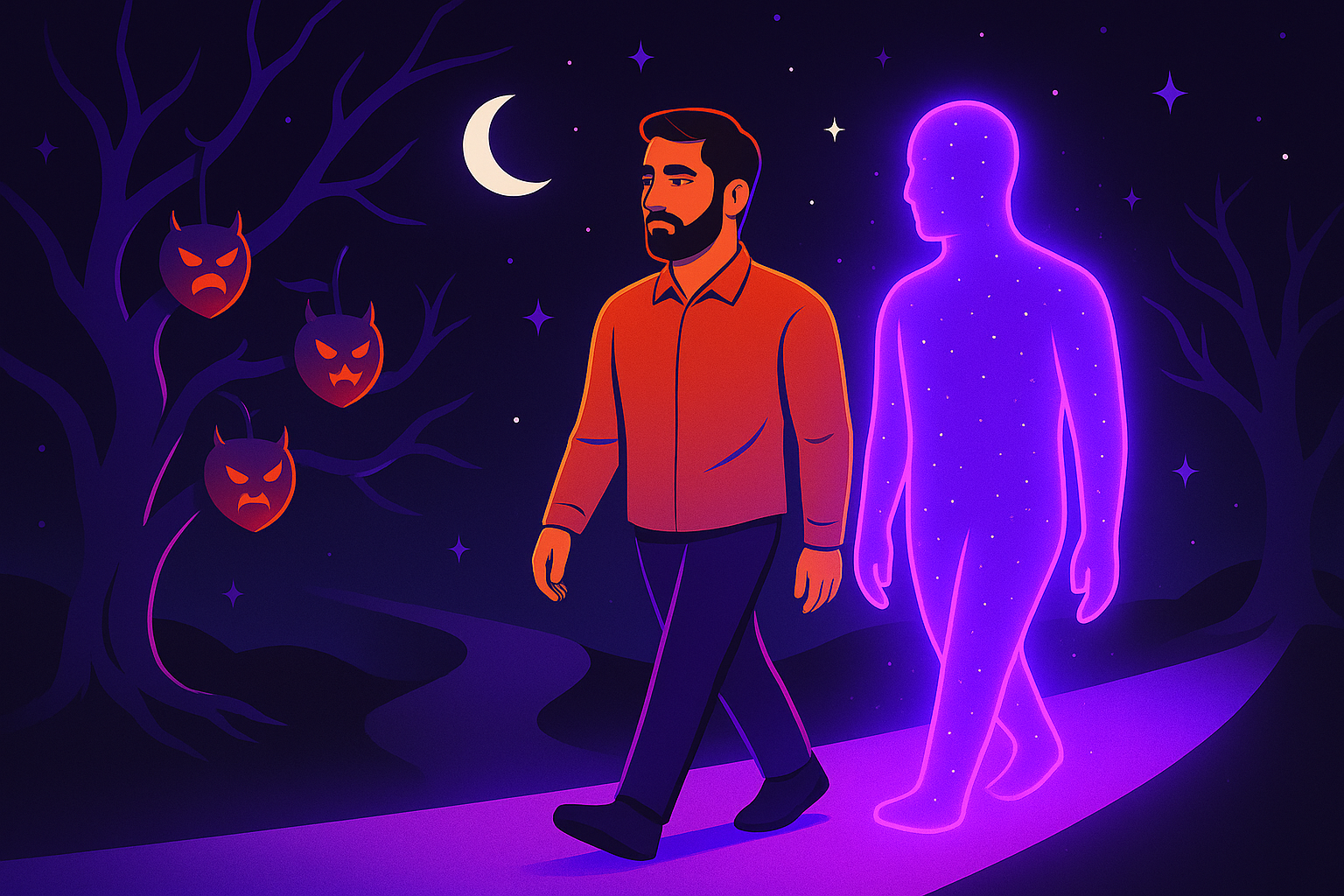
8 Prophetic Archetypes From The Quran That Will Transform Your Legacy
The greatest truth I have ever learned about prophets of God is that their lives represent an awareness stage that each person seeking to leave a legacy passes through.
Prophets represent an archetype that we need to study and apply to our lives. After careful contemplation and reflection on the Quran, I discovered 8 prophetic archetypes that are at the core of human self-actualization and transcendence.
Here are the 8 Prophetic Archetypes according to the Quran:
- Adamﷺ: The Vulnerable Human
- Idreesﷺ: The Spiritual Scholar
- Noahﷺ: The Self-Expressive Hero
- Ibrahimﷺ: The Surrenderer
- Mosesﷺ and Aaronﷺ: The Communicative Leaders
- David and Solomonﷺ: The Powerful Visionaries
- Îssa the son of Marryﷺ: The Creative Altruist
- Muhammadﷺ: The Leader of Leaders.
There are other archetypes in the Quran, and each serves a different purpose, Including the Archetype of Yunus ﷺ (Jonas) and the Archetype of Yussuf ﷺ (Josef).
However, these 8 archetypes are at the core of any transformational story. To leave a lasting legacy and meet your God with a tranquil soul, you must apply the teachings of these 8 archetypes to your life.
Imagine these archetypes stack on one another as a staircase. You start with Adam’s, and you end with Muhammad’s archetypes. It’s a natural process toward completing the 8 steps of self-transcendence and prepare for the afterlife with a mature and wise soul.
For this post, I’m going to start with Adam’s Archetype.
The Vulnerable Human — What Adam's Story Teaches Us About Our Deepest Desires
The story of Adam teaches us a lesson about our innate desire, uniqueness, limitations, and our enemy. We are all like Adam in this story, human beings sent to Earth to learn how to live like Legends (Successors) and to direct our desires to serve God rather than transgress His rules.

Directing one’s desires toward a legendary purpose is the first step toward self-actualization and self-mastery.
When God first created Adam, He guaranteed two things to him:
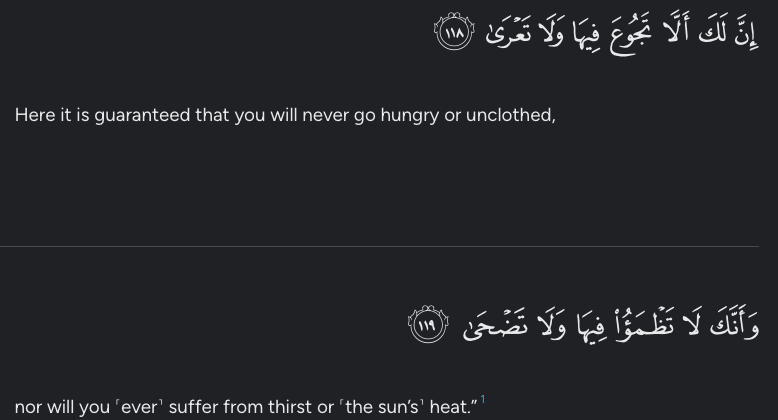
At the basic of human needs are survival needs, food, shelter, and a safe environment. That’s what God promised Adam.
God didn't promise Adam immortality, and God didn’t promise Adam riches.
Adam had the opportunity to live safely and sufficiently under one condition:
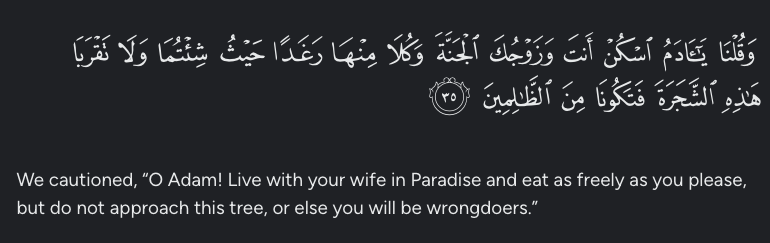
In Islam, God does not specify the type of tree from which Adam and his wife ate. Instead, God refers to it as “This Tree”. As if God is telling us it doesn’t matter what type of tree this is; as long as I commanded you not to eat from it, then you shouldn’t.
We often eat, metaphorically, from this forbidden tree, whether it’s lying, backbiting, or willfully hurting someone. We indulge in this sin due to two desires programmed within us.
The Desire of Immortality:
This desire is at the core of human experience. We seek immortality through everything we do, whether through exercising, dieting, mating, accumulating wealth, or striving for status. At its core, these actions all reflect a desire to achieve immortality, also known as longevity.
The Desire of Eternal Power:
Humans don’t like to accept their vulnerabilities. We view it as a decrease in status when we reveal our vulnerabilities to others. So we show off. We aim to be part of a large community and take on a leading role.
We seek validation as much as we seek power.
These are the two desires Satan understands so well about human psychology, and this is how he played a wicked game on Adam.
Satan whispered to Adam about outcomes that Adam wouldn’t be able to resist. Satan framed it as a question: “Shall I show you…?”

We encounter the question that Satan posed to Adam each time we have a decision to make in our lives.
If you’re looking for a new job, to get married, to buy a car, or get a higher degree certificate, every time you want to move forward in life, you will ask yourself this question:
Shall I show you that activity that will make you more money or increase your status? Shall I show you that technique that will make people like you and give you money? Shall I show you a hobby you can start that will let you live longer and be more attractive?
These questions are fine because that’s how we are programmed; we always seek more. However, what is not acceptable is seeking more in a manner that exceeds our human design. These points are made clear in the Quran.
For example, Alcohol.
People usually indulge socially in Alcohol because it’s a way to bond with others. Because of the way Alcohol has been portrayed in the Western media, it’s kinda cool that you start drinking wine or champagne. Or maybe some vodka for the teenagers that want to “fit in.”
They branded alcohol per occasions and aspirations. So, people often indulge in alcohol because they have a desire to belong, to self-express, to show off, and finally to gain power.
The Quranic message is straightforward: Alcohol is forbidden, and it’s a Satanic ritual.
We only need to be aware of each decision we want to make.
We will always choose the option that offers a boost in status and a chance to extend our lives.
If you keep chasing more for the sake of “chasing more”, you are trapping yourself in a vicious cycle. You are choosing infinity, which you will never be able to attain. You’ll burn out, and eventually, you will collapse. When you seek immortality, you will fail, and in your failure, all your vulnerabilities will be exposed to remind you that you must never “chase more”.
What occurred when Adam pursued the invulnerable route of chasing infinitely more? What occurred when Adam chose to consume something that was supposed to grant him immortality and eternal status?
He and his wife were exposed to their very vulnerable state (nakedness).
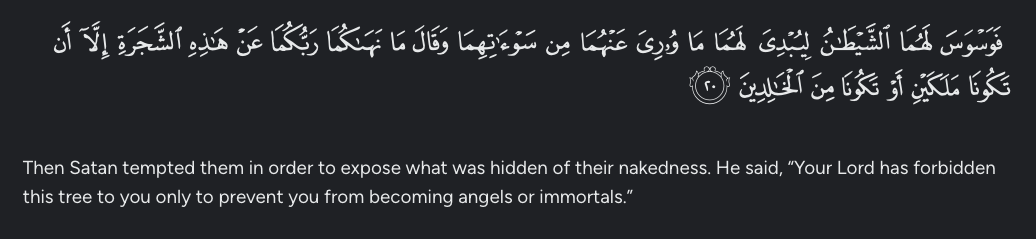
After Adam and Eve ate from the tree, they realized that Satan had been deceiving them all along. This was just an ordinary tree that would neither grant them immortality nor unlimited power.
Instead, it transcended them to a lower plane of existence, and they became less spiritual. Perhaps this tree was intoxicating; perhaps it had no effect at all. I don’t have the answer, and maybe no one ever will. However, the only thing I know is that eating from this tree made Adam realize he was prone to deception.
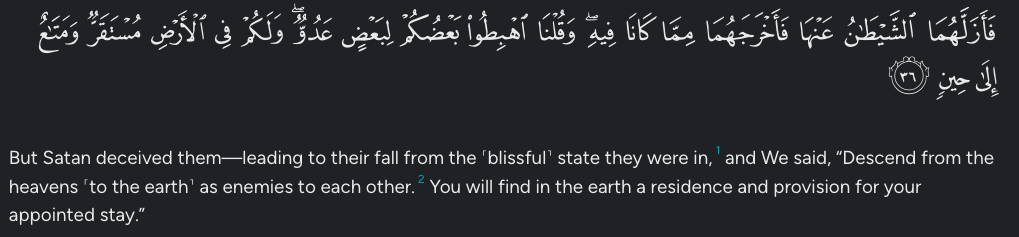
That’s why Adam felt ashamed and rushed to cover himself up. Because he realized that He had just committed a sin and disobeyed God, and for what? For nothing!

That’s the main lesson we need to learn from Adam’s story. Stick to God’s commands, and you will never go astray. It’s about submitting to the Creator no matter what, even if you don’t understand the reason for God’s commands.
The easiest way to pass this divine testing is to be aware of your intention when you chase more in life.
“Am I seeking longevity and fame, or am I seeking to obey God?”
It’s never too late to repent. And that’s how Adam’s story ended. He received guidance from God on how to repent; he repented, and God accepted.

We all identify with Adam’s archetype. We always live a life seeking the two desires of immortality and power.
The devil understands your psychology so well, and it whispers to you to seek paths that aren’t suitable for your design.
The devil aims to expose your vulnerabilities to sabotage you. But God wants you to recognize your vulnerabilities so that you can navigate around them and grow. The enemy has always been the devil; he whispered to your forefather and is always whispering to you:
Would you like me to show you the tree of immortality and eternal power?
— The Devil
Stay with the work
A short letter, when there is something worth sending.
No schedule. No marketing. A note when a new piece is published, sometimes a passage being worked through, occasionally nothing for weeks. Roughly once a month.